
Razor Wire
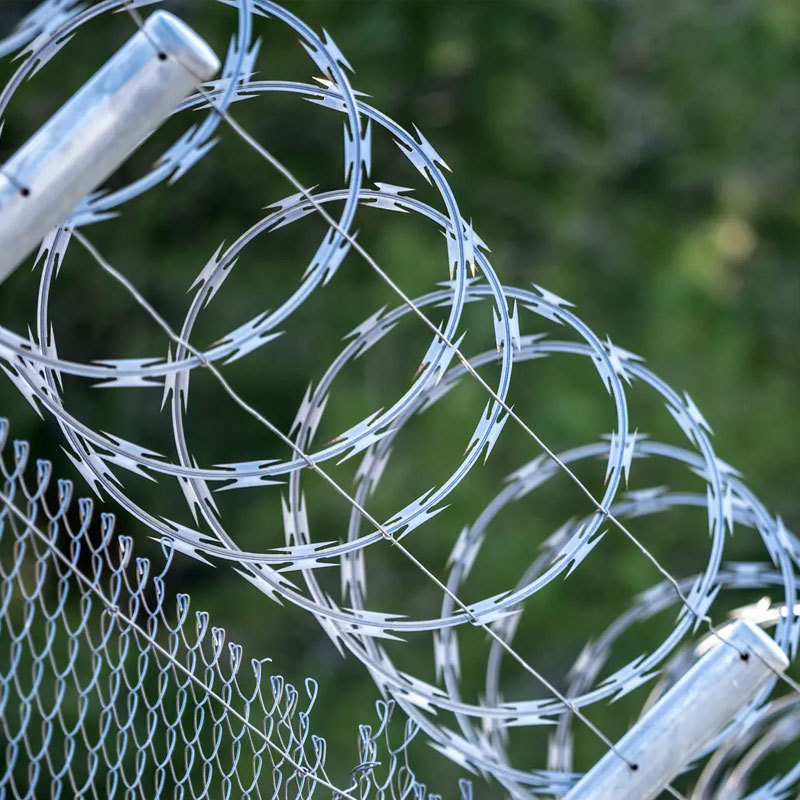
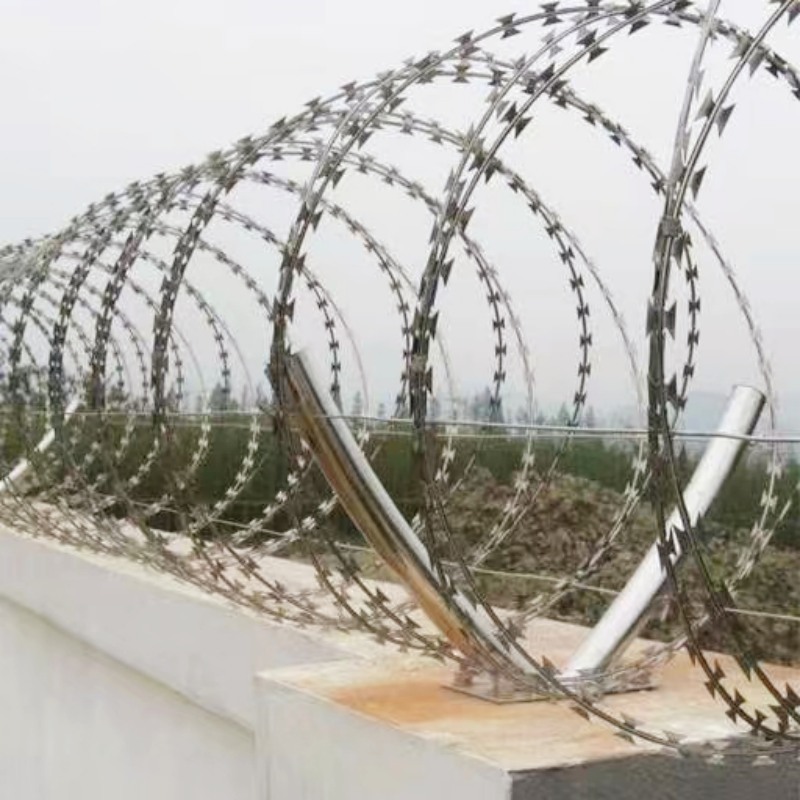
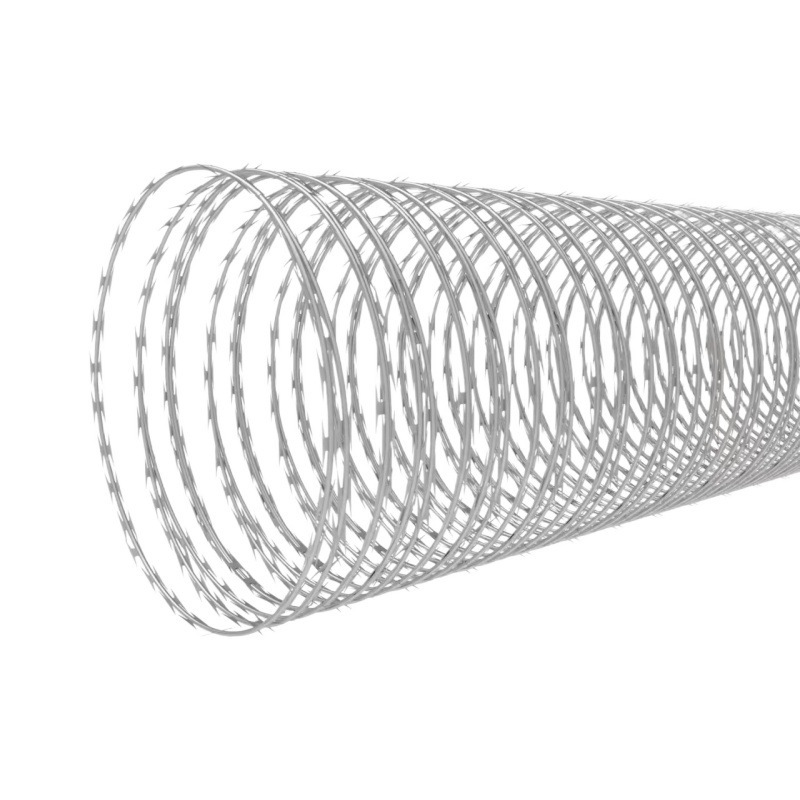
Razor wire, also known as concertina wire, consists of sharp blades attached to high-tensile wire, providing a formidable barrier against unauthorized access and enhancing perimeter security.
Description
Product Introduction of Razor wire
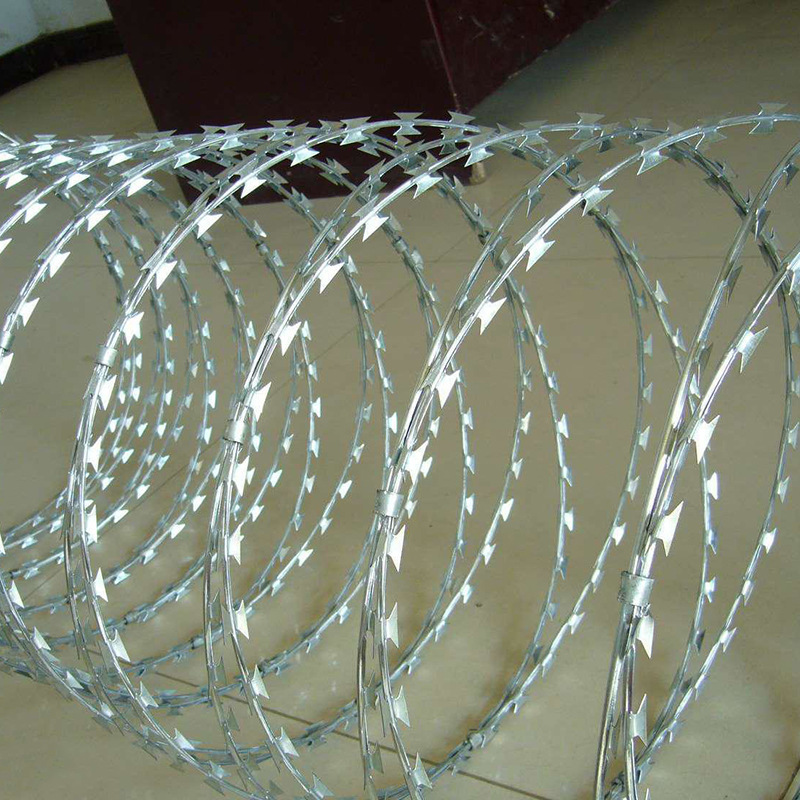
Razor wire, also known as blade barbed net, is an upgraded type of security protection product. Based on the common barbed wire, it adopts a sharper knife-shaped structure to replace the traditional barbed wire. With its extremely strong deterrent effect and protective performance, it has become an ideal choice for high-safety-level protection scenarios.


| No. | Blade style | Thickness(mm) | Wire diameter(mm) | Blade length(mm) | Blade width(mm) | Blade spacing(mm) |
| BTO-10 |
 |
0.5 | 2.5 | 10 | 13 | 26 |
| BTO-12 |
 |
0.5 | 2.5 | 12 | 13 | 26 |
| BTO-18 |
 |
0.5 | 2.5 | 18 | 15 | 33 |
| BTO-22 |
 |
0.5 | 2.5 | 22 | 15 | 37 |
| BTO-28 |
 |
0.5 | 2.5 | 28 | 15 | 45 |
| BTO-30 |
 |
0.5 | 2.5 | 30 | 18 | 42 |
| BTO-60 |
 |
0.5 | 2.5 | 60 | 32 | 100 |
| BTO-65 |
 |
0.5 | 2.5 | 65 | 21 | 100 |
Structure and Characteristics
Blade barbed wire is made from hot-dip galvanized steel plates or stainless steel plates as raw materials. Through precise stamping forming processes, it is made into metal strips with sharp serrated blades, and then twisted together with high-strength steel wires (single or multiple strands). Its core features lie in the sharpness of the blade and the sturdiness of the structure: each blade is rhombic or triangular in shape, with sharp edges like knives and a tight spacing (usually 5-10 centimeters). Once touched, it will cause serious cuts, and its deterrent power far exceeds that of ordinary barbed ropes. Meanwhile, the stranded structure of the steel wire and the blade can withstand considerable tensile force, has extremely strong resistance to shearing and climbing, and is difficult to be damaged or climbed over.
Compared with ordinary barbed wire, blade barbed wire also has the advantage of high protective density – the number of blades per unit length far exceeds that of traditional barbed wire, which can form a protective barrier without blind spots. Moreover, after being treated with galvanization or stainless steel on the surface, it has strong corrosion resistance and can adapt to harsh environments such as humidity, high temperature, and saline-alkali conditions. Its service life can reach 10 to 20 years.
Application scenarios
The field of high-security-level security
The high walls and the tops of isolation nets around judicial supervision facilities such as prisons, detention centers and detention centers are core protective facilities against prison breaks. Their sharp blades can completely block the possibility of climbing.
Military and classified units: The surrounding fences of military bases, ammunition depots, and classified research institutions form the first insurmountable security line to prevent spies from penetrating or maliciously damaging.
Critical infrastructure: Protection of key facilities such as nuclear power plants, hydropower stations, oil refineries, and large data centers to safeguard national energy and information security.
Border and port protection
The isolation fences along the land border, in combination with sensors and other devices, form a three-dimensional protection system of “physical obstruction + intelligent early warning”, effectively preventing illegal border crossing.
Perimeter protection at ports and airports, especially in sensitive areas such as runways, oil depots, and cargo zones, to prevent unauthorized personnel or vehicles from entering.
Protection for high-value venues
The peripheral guardrails of luxury goods warehouses, museums and art galleries prevent theft gangs from climbing in and protect the safety of valuable items.
For large-scale event venues, international conference centers and other temporary high-security sites, temporary barbed wire barriers can be quickly set up to enhance the short-term protection level.


